

epielle / Skincare Education
Why Does My Skin Feel Dry Even After Moisturizing?
Practical fixes for tight skin, flaky patches, and makeup that won’t sit smoothly

You apply moisturizer, but a few hours later, your cheeks feel tight again. Your nose and forehead look shiny, yet the skin around your mouth is flaky. And when you apply foundation, those dry patches become even more noticeable.
A thicker layer of cream may help, but it may not address everything causing the dryness. If cleansing leaves your skin feeling stripped, start there. If a lightweight lotion isn’t keeping your skin comfortable, a richer formula may be a better fit.

01 / Gentle Cleansing
1. Skin Feels Tight Right After Washing? Make Cleansing Gentler
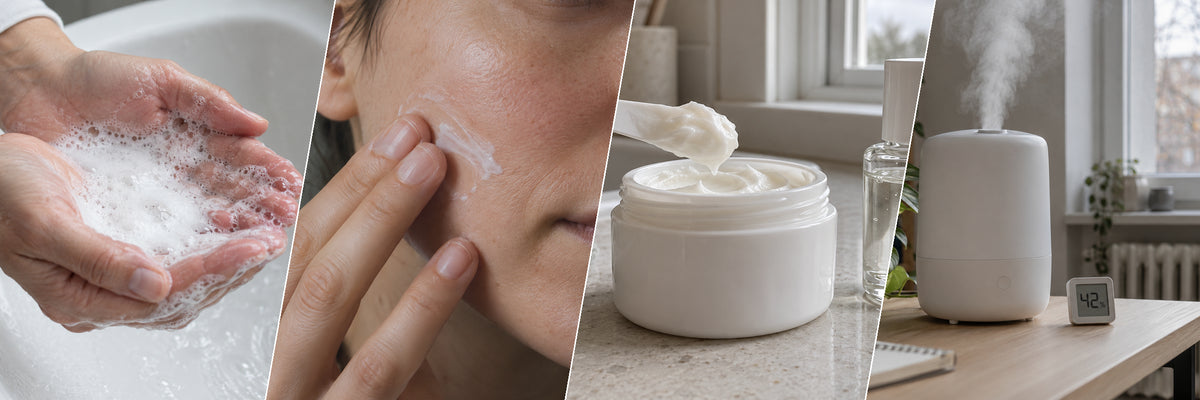
If your face feels tight as soon as you finish washing, your cleansing routine may be contributing to the dryness. Hot water, a harsh cleanser, or repeated rubbing can leave skin feeling uncomfortable before you even reach for moisturizer.
Tonight, try these steps:
- Use lukewarm water instead of hot water.
- Choose a gentle, fragrance-free cleanser. If your current cleanser consistently leaves your skin feeling tight, switch to a milder formula.
- Wash gently with your fingertips instead of using a cleansing brush or scrub.
- Pat your skin with a soft towel rather than rubbing it dry.
When removing makeup or sunscreen, follow the product’s cleansing instructions. Avoid washing repeatedly just to get that “squeaky-clean” feeling.

02 / Application Timing
2. Skin Feels Dry Again Soon After Moisturizing? Apply It Earlier
If you wait until your skin is completely dry before applying moisturizer, move that step earlier in your routine.
Cleanse → Gently pat away excess water → Apply moisturizer while skin is still slightly damp.
Dry your hair or get dressed afterward. Applying moisturizer to slightly damp skin helps retain some of the water already on your skin.
If you use a hydrating serum, follow it with moisturizer without waiting for your skin to dry completely, unless the product’s instructions say otherwise. Prefer fewer steps? You can skip the serum and go straight to moisturizer.
If dry areas start feeling tight again during the day, reapply moisturizer where needed.

03 / Ingredient Choice
3. More Serum Isn’t Helping? Try a Richer Moisturizer
If you keep layering hydrating serum but still feel dry, adding moisture may be only part of the solution. Your routine also needs to help reduce moisture loss.
Different moisturizing ingredients serve different purposes:
| Ingredient Examples | What They Do |
|---|---|
| Glycerin and hyaluronic acid | Help attract and hold water in the skin |
| Ceramides | Help replenish lipids that support the skin barrier |
| Petrolatum and dimethicone | Help reduce moisture loss from the skin’s surface |
A single moisturizer can contain several of these ingredients. The overall formula—and how your skin feels after using it—matters more than one standout ingredient.
If a lightweight gel or lotion leaves your skin feeling tight, try a richer, fragrance-free cream. Give particularly dry areas, such as your cheeks and around your mouth, a little extra attention.
If your forehead and nose are oily, you can use a lighter moisturizer there and a richer cream on dry areas. A shiny T-zone doesn’t mean you need to skip moisturizer everywhere.

04 / Exfoliation Care
4. Makeup Clinging to Flaky Patches? Take a Break From Exfoliating
When foundation catches on dry patches, it’s tempting to scrub them away. But if your skin also feels tight or stings, more exfoliation may make it more uncomfortable.
Try this approach instead.
In the evening: Pause scrubs and exfoliating treatments. Keep your routine simple with gentle cleansing and a moisturizing cream. Avoid picking at flakes or rubbing them off with a towel.
The next morning: Apply a thin layer of moisturizer to dry areas and let it settle before sunscreen and makeup. Apply foundation in light layers, and avoid repeatedly adding powder over flaky patches.
If your skin is red or stinging, focus on reducing irritation before trying to cover it with makeup.

05 / Indoor Humidity
5. Skin Feels Drier at Home or Work? Check the Indoor Humidity
Indoor heating can make the air drier, leaving your skin feeling tighter than usual. Even a richer moisturizer may not keep you comfortable if your surroundings remain very dry.
Use a small hygrometer to check the humidity. If the air is dry, a humidifier may help. Aim for indoor relative humidity of about 30–50%, and reduce humidifier use if you notice condensation on windows or damp surfaces.
Change the water and clean your humidifier according to the manufacturer’s instructions. If a heater or air vent blows directly toward your face, adjust its direction or move your seat.

06 / Extra Hydration
Want an Extra Hydration Step? Add a Hydrogel Mask
Once you’ve adjusted your cleansing and moisturizing routine, a hydrogel mask can be an optional addition on evenings when you want extra hydration.
The epielle Deep Hydration Biocollagen Mask is an overnight hydrogel mask formulated with hyaluronic acid, collagen, and galactomyces ferment filtrate. It helps moisturize skin for a smoother, dewier-looking appearance.
Start by gently removing makeup and cleansing your skin, then follow the preparation steps and wear time on the packaging. If your skin still feels dry after removal, finish with a moisturizer suited to your skin.
Longer wear doesn’t automatically mean better results. Follow the recommended wear time, and remove the mask if you notice stinging or itching. If your skin is already red or irritated, keep your routine simple rather than introducing a new mask.
Keep everyday moisturizing consistent, and add a little extra hydration when your skin needs it.


